
London, U.K. – August 3, 2026
Winning a Global Space Award is a moment. What happens next is the story.
The Global Space Awards exist to ensure that the people and organisations shaping the space sector receive the recognition they deserve – but the story doesn't end on the night. In the months that follow, our winners continue to build, launch, and push the boundaries of what's possible.
Here, we catch up with two of the 2025 winners to find out what they've been working on since December, what the award meant to their teams, and what's coming next.
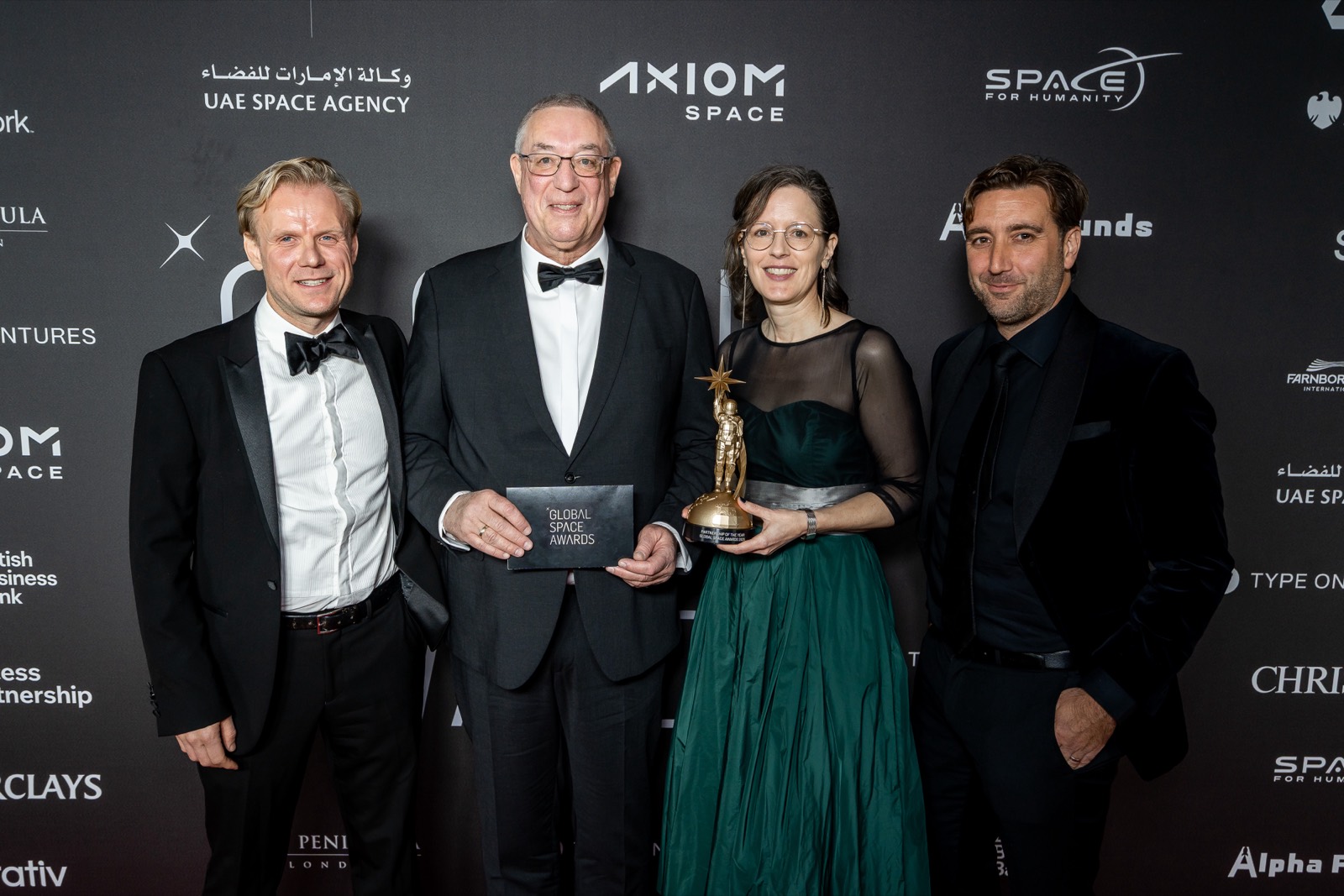
Starlab Space 2025 Global Space Awards – Partnership of the Year
Starlab is a commercial space station being developed to ensure continuous human presence in low-Earth orbit once the International Space Station is retired. What sets Starlab apart is not just its engineering – a single-launch station capable of housing four permanent crew members, with a fully equipped payload laboratory for scientific and commercial research – but the model behind it. The project is built on a coalition of six equity partners spanning five countries, including Voyager Space (US), Airbus (Europe), Mitsubishi Corporation (Japan), MDA Space (Canada), Palantir (US) and Space Applications Services (Belgium), alongside a growing roster of international agency customers from the German Aerospace Center (DLR) to Space Scotland. Starlab has shown that large-scale space infrastructure can be built across borders and by multiple partners working as one team. That conviction is precisely why Starlab was awarded Partnership of the Year at the 2025 Global Space Awards.
What has happened with Starlab since December 2025?
Starlab moved from design to production this year. The company completed its Critical Design Review in Q1 2026, and the high-fidelity mockup of the station was unveiled at NASA Johnson Space Center. The mockup helps engineers validate exactly how astronauts will live and work aboard Starlab – from evaluating crew movements and visibility and testing workstation layouts to practising procedures and emergency operations.
Starlab's commercial payload capacity was fully reserved by the end of Q1 2026, and by mid-2026 that figure had climbed past 100% subscribed. New commitments continue to roll in, including from the German Aerospace Center (DLR), the Center for Space and Aviation Switzerland and Liechtenstein, Space Liintech, Rhodium Scientific, and Plastron Group.
What did winning a Global Space Award mean to the team?
The recognition validated an unconventional model and proved that six equity partners across five countries could move as one team – through NASA milestones, funding rounds, and the day-to-day work of building a next-generation commercial space station. Starlab is infrastructure for whoever needs to operate in low-Earth orbit after the ISS is gone, built on the idea that no single company or country gets there alone. The award reinforced to our partners and our customers that the model works. A year later, with more milestones complete, the mockup built, capacity oversubscribed and international agencies signing on, Starlab continues to hold strong.
What is the team most excited about in the year ahead?
The shift from design to manufacturing is the headline – Starlab continues to move into the build phase on a station engineered for single-launch deployment. NASA's Commercial LEO Destinations Phase 2 procurement is the biggest near-term marker, with an award targeted for spring 2027. Starlab enters that competition with reserved capacity and international commitments already in place. The next step is to continue expanding that cross-sector, cross-border base.
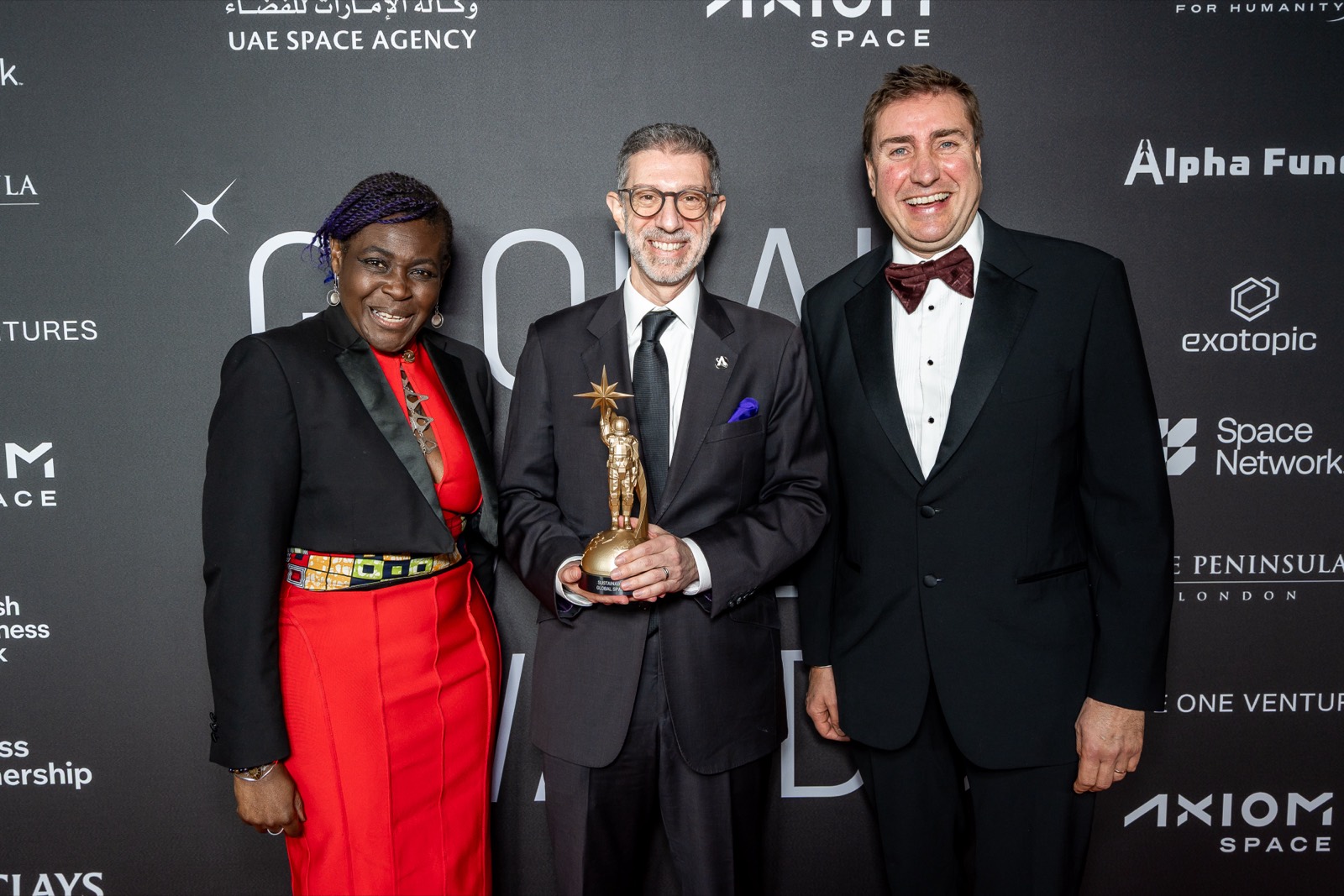
Astroscale 2025 Global Space Awards – Sustainability for Space
Founded in 2013, Astroscale is a pioneer in commercial on-orbit servicing, headquartered in Japan with operations across the UK, US, France, and Israel. The company has built its reputation on solving one of the most pressing challenges facing the space sector: the growing accumulation of debris in low-Earth orbit. Through missions including ADRAS-J – the world's first attempt to safely approach and characterise an existing piece of large debris – and partnerships with agencies including JAXA, ESA, the UK Space Agency, and the United States Space Force, Astroscale has positioned itself at the forefront of improving the safety and sustainability of space operations for generations to come. This commitment to building the entire infrastructure of orbital sustainability made Astroscale a defining choice for the Sustainability for Space award at the 2025 Global Space Awards.
What has Astroscale been working on since the Awards?
Since December 2025, at Astroscale in the UK we have completed the Critical Design Review for Orpheus – a Dstl mission that will strengthen the UK's Space Domain Awareness capabilities – continued our work with ESA on our IRUS in-orbit refurbishment study, and welcomed a new graduate cohort to help power the next generation of sustainable space technologies.
What did winning a Global Space Award mean to the team?
Winning a Global Space Award was a fantastic recognition of the team's expertise, passion and commitment. It's particularly meaningful to see our work in space sustainability recognised by our peers across the global space sector.
What is the team most excited about in the year ahead?
We're especially excited about ELSA-M, which is currently undergoing environmental testing ahead of its planned 2027 launch. As the world's first commercial end-of-life service for prepared satellites, it represents a major step towards making orbital sustainability a reality. We're also proud that ELSA-M will carry the Astra Carta Seal – an initiative inspired by His Majesty King Charles III that promotes sustainability and responsible stewardship in the space sector.